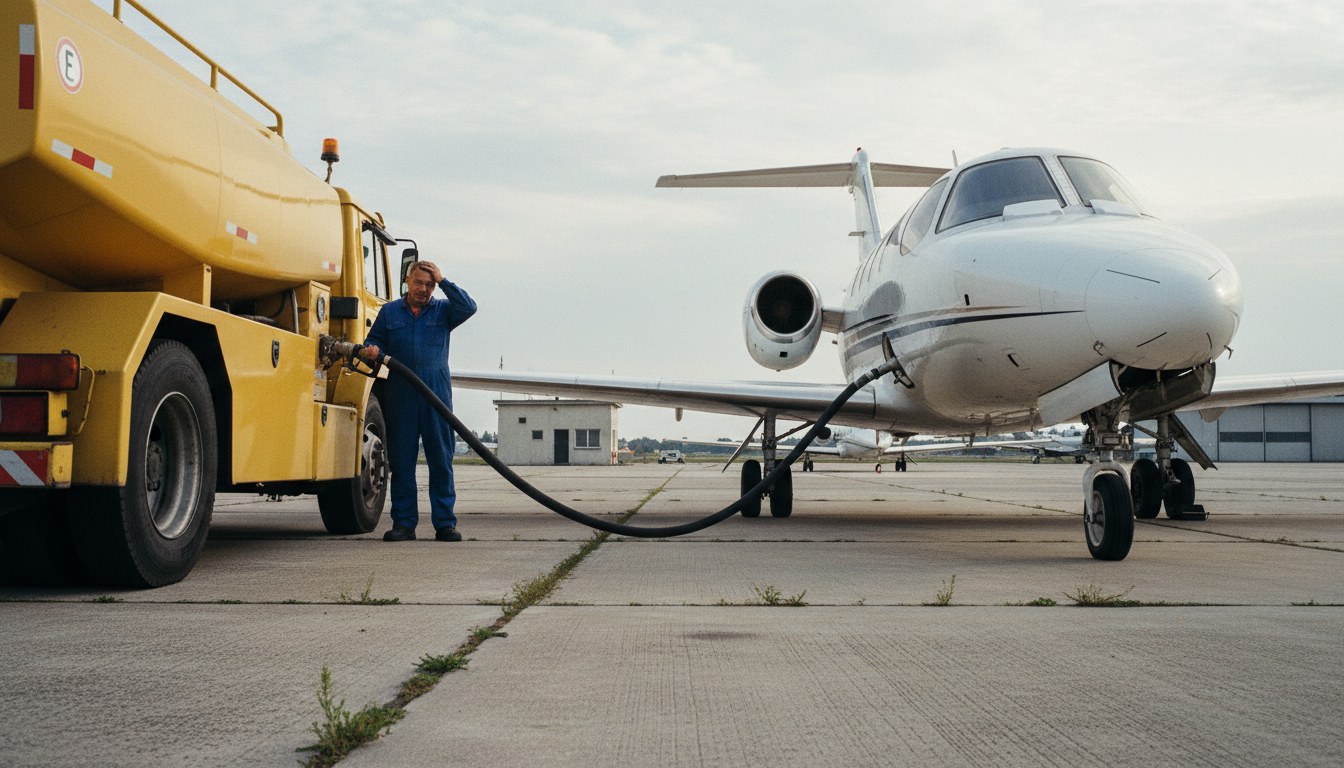
A Citation CJ3 burns roughly 130 gallons per hour. At today's Jet A prices, that's about €520 per hour in fuel. Come January 2025, when EASA's sustainable aviation fuel mandate kicks in, that same hour will cost €1,560 in fuel alone.
The math is brutal and simple. Europe's new SAF blending requirements—2% sustainable fuel by 2025, ramping to 70% by 2050—will force every operator flying commercially in European airspace to pay triple the fuel bill overnight. The regulatory text doesn't care if you're NetJets with 700 aircraft or Giuseppe's three-Citation operation in Bergamo.
But only one of those operators can absorb a €1,040-per-hour fuel cost increase and stay solvent.
"We're looking at an immediate 15-20% bump in our hourly rates just to break even," says Marcus Kleyn, managing director of a mid-sized charter operator based in Munich who declined to name his company. "Our clients are already price-sensitive post-COVID. This isn't a gradual adjustment—it's a cliff."
The European Commission designed the mandate to push aviation toward carbon neutrality, but the implementation timeline assumes operators can simply pass costs to customers. That works fine when you're charging €8,000 per hour for a Global 7500. It's corporate suicide when your bread and butter is €2,200-per-hour King Air charters.
SAF currently trades at €2,100-2,400 per metric ton versus €680-750 for conventional Jet A, according to IATA fuel price bulletins. Even the mandated 2% blend creates a 30% fuel cost premium that smaller operators simply cannot finance. They lack the fleet scale to negotiate volume discounts with SAF suppliers, and their thin margins—typically 8-12% for charter operations—evaporate instantly.
Large operators are already locking in multi-year SAF contracts and building the premium into their pricing structures. Smaller shops face spot-market SAF prices with zero negotiating leverage. The result is predictable: consolidation or closure.
"We've had three acquisition inquiries since the SAF timeline became final," admits one charter operator in southern France. "The offers aren't generous, but they're starting to look realistic compared to trying to finance this transition independently."
The mandate also creates perverse operational incentives. Operators will increasingly ferry empty aircraft to non-EU airports to fuel up on conventional Jet A, then fly back to collect passengers. A Citation flying from London to Nice might detour to Geneva or Zurich purely for cheaper fuel. The environmental logic collapses.
European charter associations have lobbied for graduated compliance based on fleet size, similar to emissions trading schemes that exempt smaller participants. EASA rejected this approach, arguing it would undermine the policy's environmental goals. The agency's position papers consistently frame the mandate as "technology-neutral" and "market-driven."
That market-driven approach will drive plenty of operators out of the market entirely. By 2026, Europe's business aviation sector will likely feature half as many charter certificates and twice the average fleet size per operator. The convenience and competitive pricing that made charter accessible to mid-market clients disappears with the operators who provided it.
The survivors will be those with balance sheets thick enough to weather three years of compressed margins while SAF production scales and pricing moderates. Everyone else becomes a distressed asset or simply closes the hangar doors.
Sources
References used in this article
- EASASAF mandate implementation timeline
- IATASustainable aviation fuel pricing data
- European Business Aviation AssociationCharter operator financial impact studies
- Aviation WeekSAF market analysis and pricing trends