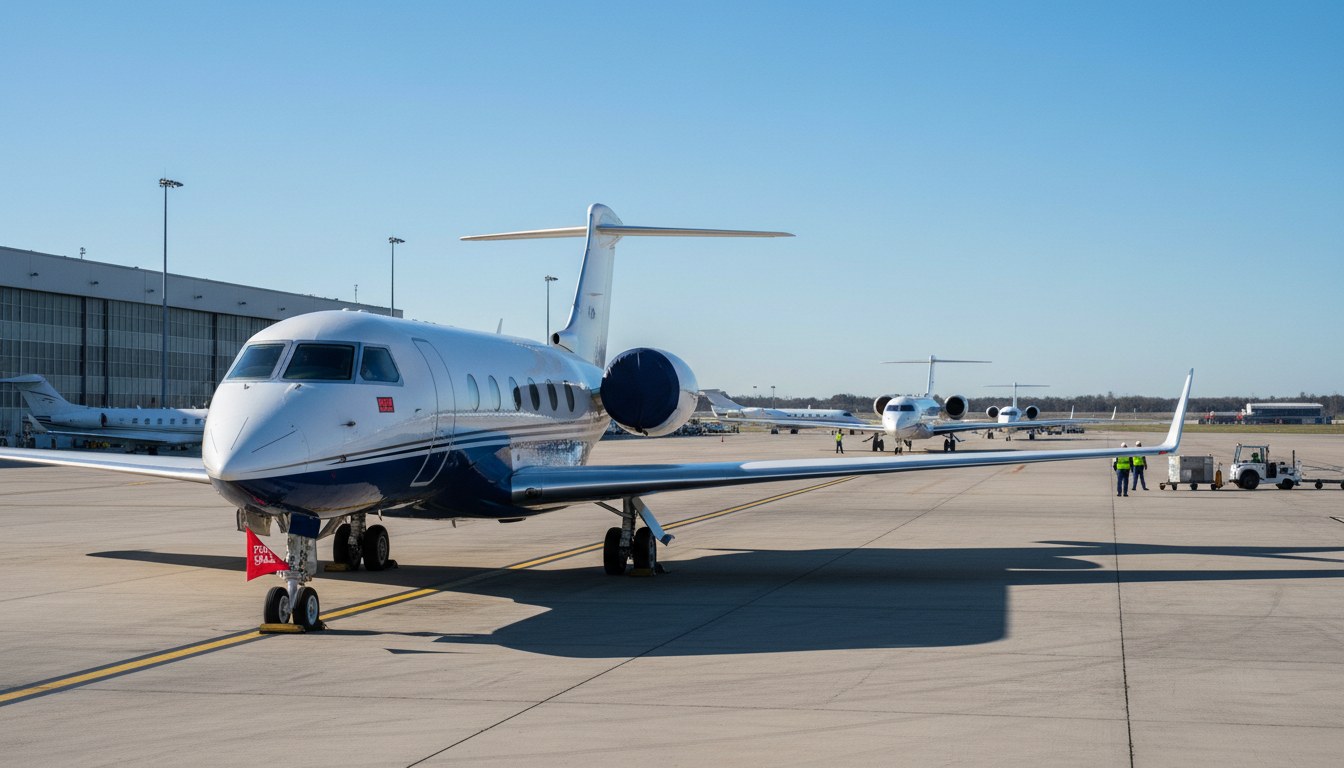
NetJets has listed seventeen of its newest Gulfstream G650s for sale in the past four months, according to broker networks tracking the pre-owned market. That's nearly a quarter of the ultra-long-range jets the Berkshire Hathaway subsidiary acquired between 2022 and 2024.
The sell-off isn't financial distress—it's strategic recalibration. NetJets' Q3 2024 SEC filing reveals the company's average flight segment dropped to 1.8 hours, down from 2.3 hours in 2019. When your typical passenger wants Boston to Miami, not Boston to Dubai, a $75 million intercontinental cruiser becomes expensive overkill.
"We're seeing a fundamental shift in how fractional owners actually fly," says Steve Varsano, founder of The Jet Business in London. "The pandemic normalized shorter, more frequent trips. A Challenger 350 can handle 80% of what people thought they needed a G650 for."
The numbers bear this out. NetJets added 31 Bombardier Challenger 3500s to its fleet in 2024 while parking or selling longer-range aircraft. The Challenger's 3,400-nautical-mile range covers transcontinental U.S. routes with room to spare, burns 30% less fuel than a G650, and costs fractional owners roughly $8,000 less per flight hour.
This isn't unique to NetJets. Flexjet recently converted six G650 orders to smaller Praetor 600s. VistaJet's utilization data shows 73% of member flights stay under four hours—well within mid-cabin territory. The ultra-long-range market that seemed unstoppable five years ago is contracting as operators realize their customers' actual mission profiles.
Gulfstream's own delivery data supports this trend. The company delivered 47 G650s in 2023 versus 67 in 2021, while ramping up production of the smaller G400 and G500. Factory lead times for large-cabin aircraft have dropped from 36 months to 24 months as demand softens.
The resale market reflects the shift. G650s are taking longer to move—averaging 147 days on market compared to 89 days for Challenger 350s, according to JetNet iQ. Pricing has compressed too, with 2018-2020 G650s now trading in the $58-62 million range, down from peak values near $70 million.
For NetJets, the fleet optimization makes operational sense. Smaller aircraft mean more scheduling flexibility, lower positioning costs, and better asset utilization. A Challenger can generate 800-900 flight hours annually versus 600-700 for a G650 simply because it fits more mission profiles.
The shift also reflects changing wealth patterns. Today's fractional buyers are more likely to be tech entrepreneurs or private equity partners who value efficiency over status symbols. They want reliable access to Aspen or the Hamptons, not bragging rights about non-stop range to Singapore.
NetJets' G650 fire sale signals the end of fractional aviation's range obsession. In a market increasingly defined by frequency over distance, the sweet spot has moved from intercontinental giants to versatile mid-cabin workhorses that can handle the 90% mission while burning half the fuel.
Sources
References used in this article
- JetNet iQPre-owned market data and days-on-market statistics
- SEC Edgar DatabaseBerkshire Hathaway/NetJets Q3 2024 filing
- Gulfstream AerospaceAircraft specifications and delivery data
- Aviation WeekFractional operator fleet analysis