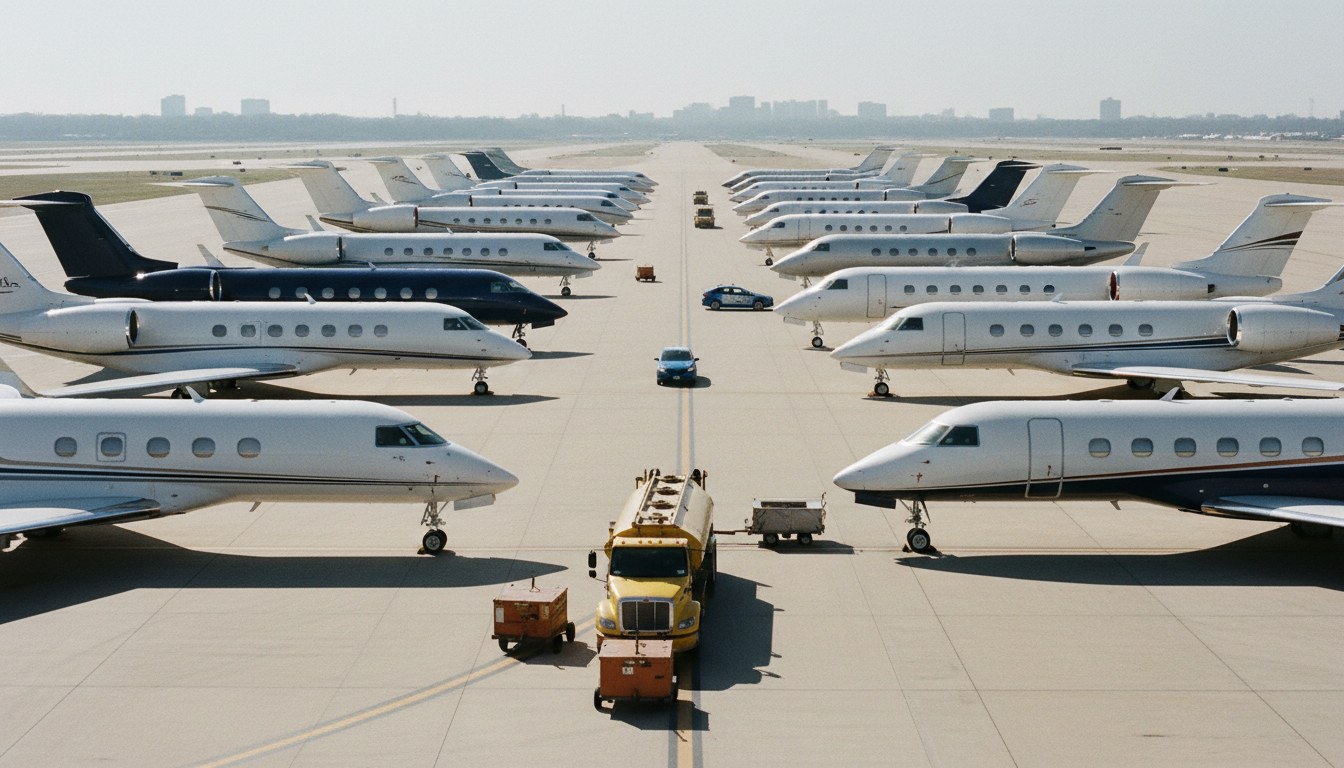
Your Citation just burned $80,000 in fuel and fees getting you from Teterboro to Aspen, and $12,000 of that went to two companies you've never heard of but who own the only places your pilot was allowed to park.
Signature Flight Support controls 206 locations across the United States—more FBO facilities than American Airlines has hub cities. Atlantic Aviation runs another 100-plus. Together with Avfuel, Ross Aviation, and Sheltair, these five companies now control 78% of all fixed-base operator facilities at the airports that matter for private aviation.
The consolidation happened fast. Signature, owned by BBA Aviation until Blackstone bought it for $4.1 billion in 2018, went on an acquisition spree that swallowed regional operators from Florida to Alaska. Atlantic, backed by KKR since 2013, did the same. The result: where you once had competing FBOs at major airports driving down handling fees and fuel prices, you now have effective monopolies.
Take Van Nuys Airport, the world's busiest general aviation field. Signature runs the north side, Atlantic the south. Both charge identical fuel flowage fees—$5.95 per gallon—that have nothing to do with the actual cost of pumping Jet A. These aren't competitive rates; they're coordinated pricing that would make telecom executives blush.
The mechanics work like this: airports lease FBO space through long-term exclusive agreements, typically 20 to 40 years. Once Signature or Atlantic locks up the prime real estate—the spots closest to runways with the biggest hangars—competitors can't enter. New FBOs need airport authority approval, hangar construction permits, and fuel infrastructure that costs tens of millions. The big chains simply outbid everyone else, then recoup their investment through captive pricing.
Operators feel the squeeze directly. A Gulfstream G650 flying from Miami to Aspen pays roughly $3,200 in handling fees at Signature FBOs on both ends—fees that cover everything from marshaling to lavatory service. But these aren't cost-plus arrangements. They're whatever the market will bear when the market has no alternatives.
The ripple effect hits passengers in ways they never see. Charter operators build FBO fees into their hourly rates. Empty leg flights—already discounted to fill repositioning flights—carry the same fee structure, limiting how low operators can price them. When Flexjet or NetJets quotes you a card rate, baked into that number is the assumption that Signature or Atlantic will extract their cut at both ends of your trip.
Smaller airports tell a different story. Frederick Municipal in Maryland still has three competing FBOs. Fuel prices there run 40 cents per gallon lower than nearby monopoly fields. Handling fees for the same Citation run half what Signature charges at Washington Dulles, 45 minutes away.
The Federal Aviation Administration tracks FBO ownership through facility licensing, but has no authority over pricing or competition. Airport authorities care about revenue guarantees, not passenger costs. The result is a textbook case of infrastructure capture: private companies extracting monopoly rents from essential transportation nodes.
For passengers paying six-figure charter bills, FBO consolidation represents a hidden tax on private aviation—one that's growing as the big five continue acquiring the independents who once kept prices honest.
Sources
References used in this article
- Aviation International NewsFBO market concentration analysis
- Federal Aviation AdministrationFBO facility ownership database
- Business Aviation NewsSignature Flight Support acquisition history
- Aviation WeekFBO pricing and fee structure analysis