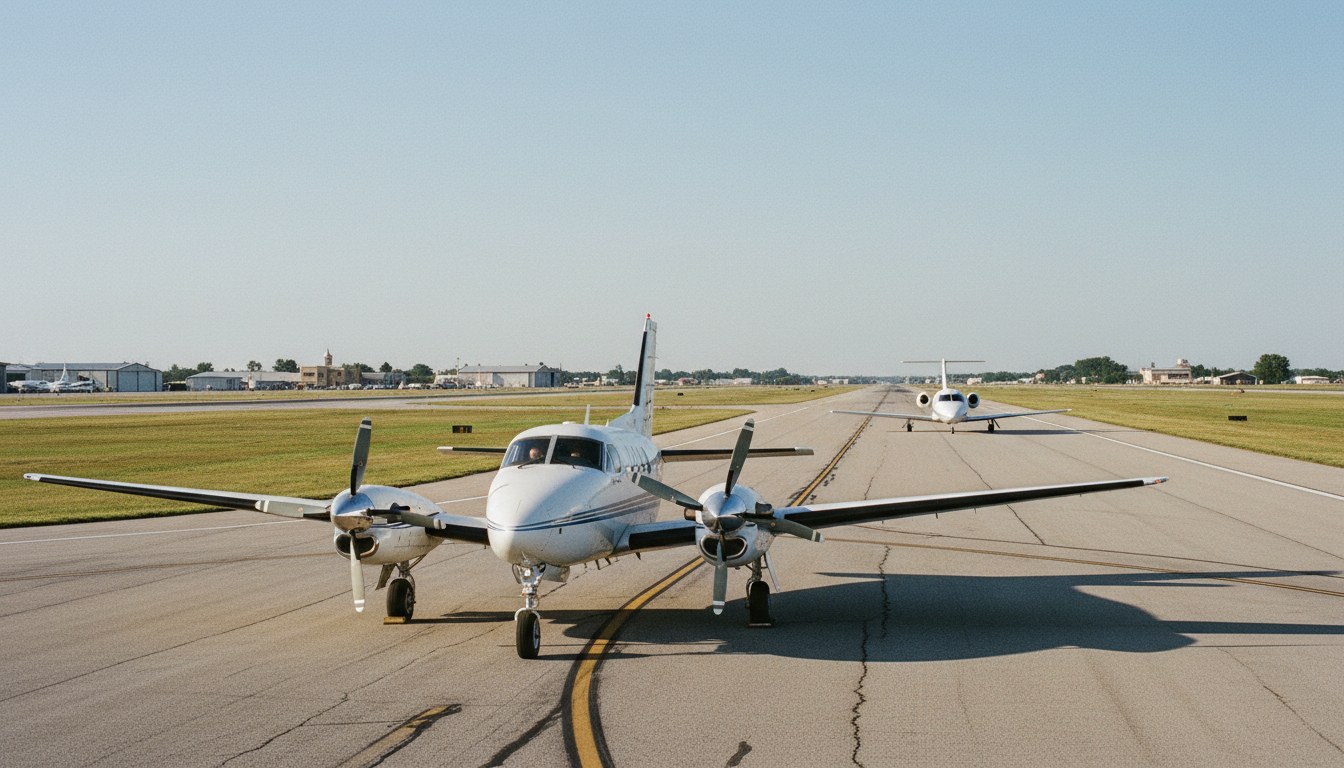
A Citation CJ3+ cruises 140 knots faster than a King Air 350, yet it loses the race from Boston to Washington on Tuesday mornings.
The culprit isn't speed—it's airports. While the CJ3+ burns through its 190-nautical-mile advantage at FL410, the King Air pilot vectors straight into Reagan National or Dulles without the fuel stop that shorter-legged jets often require. More critically, the turboprop accesses 5,200 public-use airports in the continental US versus roughly 3,000 that can handle light jets with their longer runway requirements.
Textron's operational data reveals the deeper truth: King Air 350s average 73% schedule reliability on sub-400-nautical-mile routes, compared to 68% for Citation CJ-series aircraft. The difference comes down to weather minimums and runway performance. A King Air 350 needs just 3,300 feet for takeoff at maximum weight; a CJ3+ requires 4,560 feet. When your client needs to reach Burlington, Vermont, or Jackson Hole on short notice, that 1,260-foot difference determines whether you're airborne or driving.
Consider the Newark-to-Nantucket route that kills August Fridays. The CJ3+ pilot faces a choice: carry less fuel and risk a fuel stop in Boston, or depart heavy and pray the Memorial Day weekend traffic at Teterboro doesn't extend taxi times beyond his fuel reserves. The King Air 350 pilot simply loads eight passengers and departs—Nantucket's 6,303-foot runway offers plenty of margin, and the turboprop's fuel efficiency eliminates range anxiety entirely.
Operational costs tell the same story. King Air 350s burn roughly 140 gallons per hour versus the CJ3+'s 190 gallons, while requiring less specialized maintenance infrastructure. A King Air can overnight at virtually any controlled field; Citation jets need specific hangar heights, ground support equipment, and certified technicians that simply don't exist at smaller airports.
The speed differential matters less than operators assume. Yes, the CJ3+ cruise-climbs to 45,000 feet and hits 416 knots true airspeed. But factor in the extra 20 minutes for pre-flight at Class B airports, potential holds in busy terminal airspace, and the reality that most sub-400-nautical-mile flights spend significant time below FL300 anyway. The King Air's 312-knot cruise speed, combined with its ability to operate from airports 15 minutes closer to your final destination, often produces identical block times.
Weather seals the argument. Turboprops handle icing conditions that ground light jets, and their lower service ceilings mean fewer encounters with severe clear-air turbulence that forces jets to step down anyway. When Chicago O'Hare shuts down for thunderstorms, the King Air diverts to Palwaukee or DuPage—options unavailable to jets committed to longer runways.
The real revelation comes from studying actual trip data rather than manufacturer cruise charts. On routes under 250 nautical miles, turboprops win decisively. Between 250 and 400 miles, the outcome depends entirely on endpoint airports and weather. Only beyond 400 miles do jets consistently deliver their theoretical time advantage—assuming both aircraft can actually reach the destination airport.
Speed sells aircraft. Airport access completes missions.
Sources
References used in this article
- Textron AviationKing Air 350 and Citation operational data
- Aircraft Owners and Pilots AssociationAirport runway length database
- Federal Aviation AdministrationPublic-use airport statistics
- Aviation International NewsBusiness aviation traffic patterns